Salt Lake City's Go-To Auto Dealers for Every Budget
Looking for a new ride in Salt Lake City? You've come to the right place—browse local dealers, compare options, and find your next car without the hassle.
Map of Businesses in Salt Lake City
All Listings in Salt Lake City
11 businesses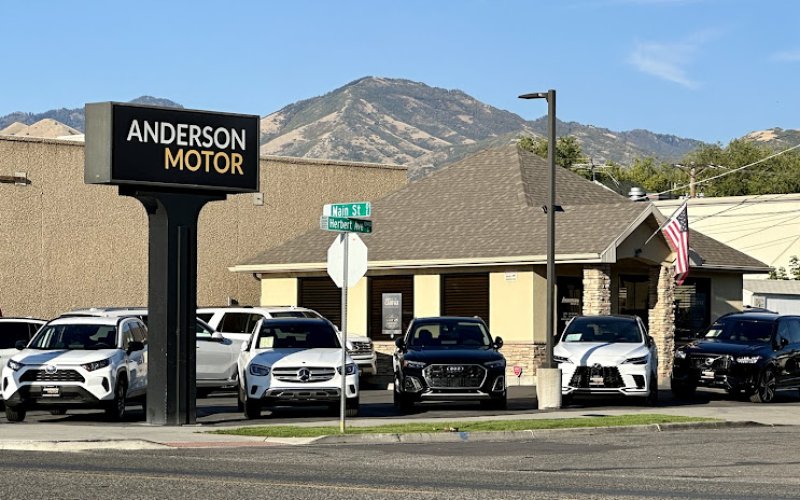
Anderson Motor Company
Used car dealer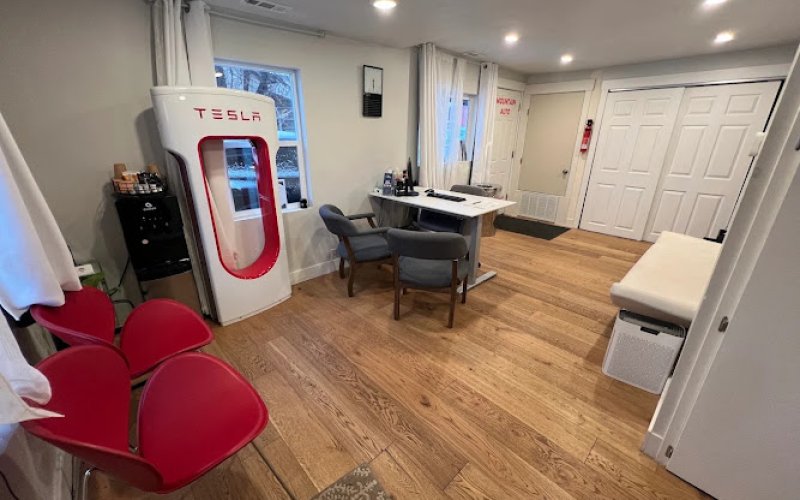
Mountain Auto SLC
Car dealer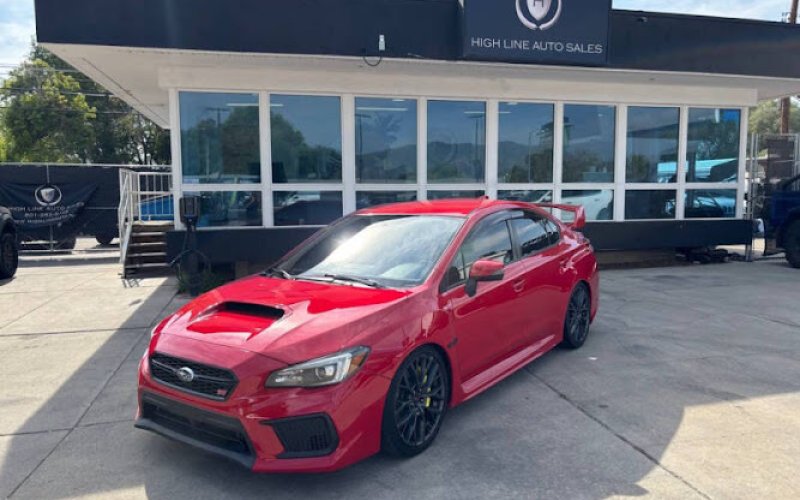
High Line Auto Sales
Used car dealer
Hype Cars
Used car dealer
Parkline Motors
Used car dealer
The Good Car Dealer
Car dealer
Prestman Auto
Used car dealer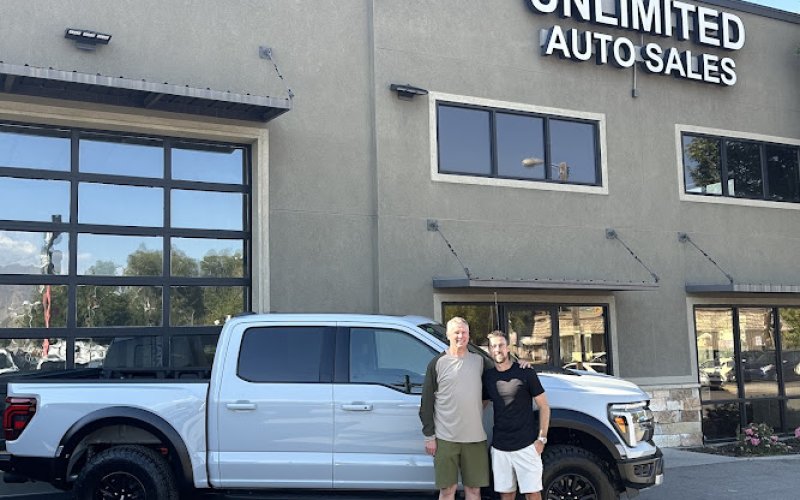
Unlimited Auto Sales
Used car dealer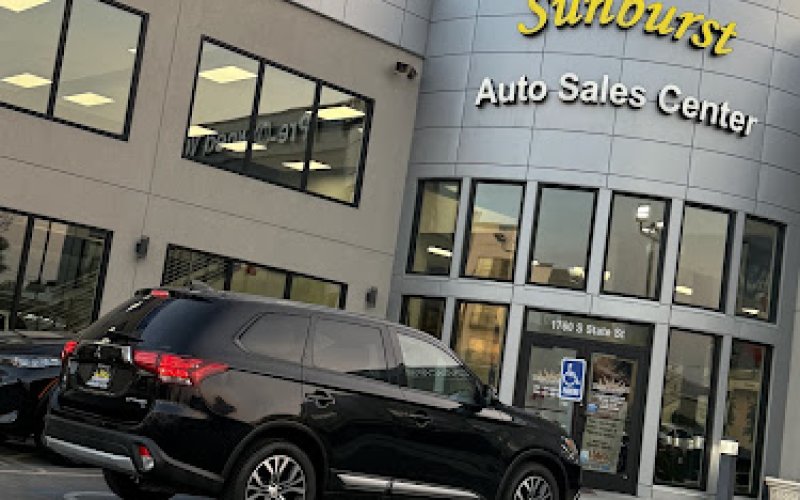
Sunburst Auto Sales Center
Used car dealer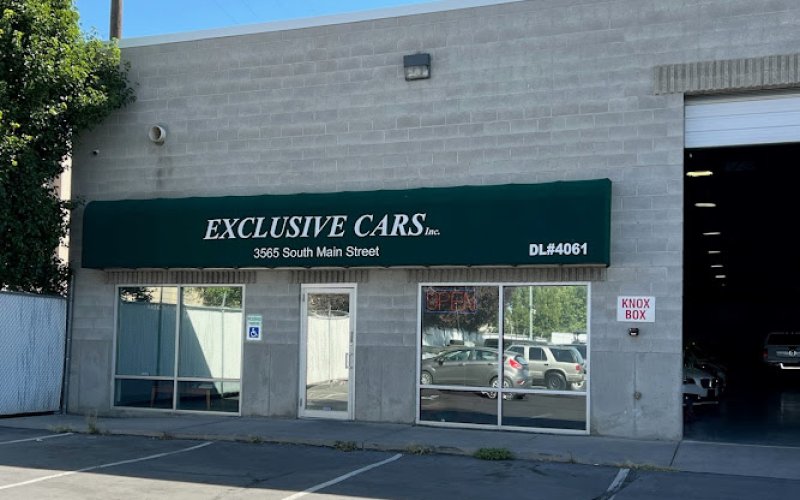
Exclusive Cars
Used car dealer
CAR CITY
Used car dealer🏆 Are you a dealer in Salt Lake City? — Get featured at the top of this page for $249/year
Get featured →Research Tools for Salt Lake City Car Buyers
Dealers advertise the base price — but you pay the out-the-door price. Calculate your real cost before stepping into the dealership in Salt Lake City.
* UT state sales tax rate is 4.85%, applied here to the advertised price only. Local taxes, trade-in credit rules and doc fee rules vary — check with the dealer. Registration/title is an estimate; actual fees vary by county. This calculator is for budgeting purposes only.
Select the type of vehicle you're considering. We'll give you the critical questions to ask before you drive to the dealership.
Is the advertised price the full price, or does it include mandatory dealer add-ons like window tint or nitrogen in tires?Dealers sometimes add $500–$2,000 in add-ons. Ask for the full itemized out-the-door price before visiting.
Is this exact vehicle physically on your lot at your Salt Lake City location right now?Some dealers list cars from other locations or in-transit. Confirm it's there before you drive.
What is your current doc fee, and is it negotiable?UT has no cap on doc fees — the average is $150–$250, but some dealers charge $500+.
Does the MSRP include any Market Adjustment or ADM (Additional Dealer Markup)?Hot models often get markups above MSRP. Get the answer in writing.
What factory incentives or rebates are currently available for this model?Manufacturer incentives can save thousands — and a dealer may not volunteer this info.
What is your return/exchange policy after purchase?Not all dealers offer one. A 3–7 day return window is a trust signal.
Can I take the car for an extended test drive or an overnight evaluation?This is a standard ask at reputable dealerships and helps you spot issues.
Can you provide a free Carfax or AutoCheck report for this vehicle's VIN?A reputable dealer will share this without hesitation. Accidents, odometer rollbacks, and salvage titles appear here.
What is the full service history — was maintenance done at a dealership or independently?Dealer-serviced records are easier to verify. Ask for copies.
Can I arrange a pre-purchase inspection (PPI) by an independent mechanic?This is your strongest protection on a used car. Any dealer who refuses is a red flag.
Is there any rust, frame damage, or flood damage history on this vehicle?Flood-damaged cars can turn up in any market, especially after major storms. Ask directly and verify with a VIN report.
What is the 'as-is' status? Is any warranty included, and for how long?Understand exactly what's covered — some used cars come with 30-day powertrain coverage.
Why is this vehicle being sold? Was it a trade-in, lease return, or auction purchase?Origin affects reliability expectations and price negotiation leverage.
What is your best out-the-door price, including all fees and taxes?Ask for a written OTD breakdown before any paperwork begins.
Which manufacturer's CPO program covers this vehicle — the factory program or a dealer's own?Factory CPO (e.g., Toyota Certified, Honda Certified) offers standardized coverage. Dealer-only CPO programs vary widely.
Exactly what does the CPO warranty cover, and what is excluded?Ask for the written warranty document. Common exclusions: wear items, tires, glass, infotainment.
How many inspection points does your CPO checklist include, and can I see the completed report?A genuine CPO inspection is 100–150+ points. Ask to see the signed document.
Is there a deductible per claim, and does the warranty transfer if I resell?Deductibles of $0–$200 are common. Transferability adds resale value.
Is the vehicle still within its original factory bumper-to-bumper warranty period?CPO bumper-to-bumper may be separate from the original factory period — clarify both timelines.
Does the CPO price include roadside assistance, and for how long?Most manufacturer CPO programs include 24/7 roadside. Confirm the term.
What is the out-the-door price including the CPO certification fee?Some dealers charge a 'CPO fee' separately. This should be disclosed upfront.
These charges can add $1,000–$4,000+ to the price you see advertised. Know them before you sit down with a finance manager in Salt Lake City.
Doc Fee (Documentation Fee)
Charged for processing paperwork. In UT, there is no state cap on doc fees — dealers may charge any amount.
Typical: $150 – $500+Dealer Add-ons (Installed Options)
Window tint, paint sealant, fabric protection, nitrogen tires. Often pre-installed and non-negotiable — but you can try to have them removed from the price.
Common: $300 – $2,000Finance & Insurance (F&I) Add-ons
Extended warranties, GAP insurance, tire-and-wheel protection. Presented in the finance office after you've agreed on price. Each item is optional and separately negotiable.
Common: $500 – $3,000+Market Adjustment / ADM
A markup added above MSRP on high-demand vehicles. Completely legal, 100% negotiable. If you see it — negotiate or walk.
Varies: $500 – $10,000+Sales Tax
UT state sales tax on vehicle purchases is 4.85%. This rate is set by the state — it's not negotiable. Local taxes and trade-in credit treatment vary, so confirm with the dealer.
State rate: 4.85%Registration & Title Fees
State and county fees for transferring title and registering the vehicle. Legitimate and required — but the amount is set by the state, not the dealer.
Typical: $100 – $200About Auto Dealer in Salt Lake City
Here's what caught my attention digging through DMV data: Salt Lake City processed 47,832 new vehicle registrations in 2024—that's a 12% jump from the previous year. But here's the kicker. Zero dedicated auto dealerships in our directory for a metro area pushing 1.3 million people. The numbers tell a story that's both surprising and not. Utah's vehicle ownership rate sits at 2.1 cars per household, well above the national average of 1.9. We're a car-dependent city spread across the valley floor, and with median household income hitting $78,400 in 2024 (up 8.3% year-over-year), people have money to spend on wheels. Major employers like Goldman Sachs, Adobe, and the expanding tech corridor along I-15 are pulling in workers who need reliable transportation across our sprawling geography. What makes Salt Lake City different? Geography, for starters. We're landlocked with limited public transit reaching the suburbs where most people actually live. The average commute runs 22.4 minutes according to census data, and that's assuming you're not dealing with canyon traffic to Park City or construction on I-80. Plus our elevation—4,330 feet—means different performance considerations for vehicles. Local buyers care about all-wheel drive capability for canyon access and winter driving. That creates demand for specialized inventory and expertise that generic dealership models might miss.
Downtown & Central City
- Area Profile: Mix of historic buildings (1900-1940s) and new high-rises, condos dominating, limited parking
- Common Auto Dealer Work: Luxury vehicle sales, lease returns, urban-friendly compact cars and hybrids
- Price Range: Higher-end inventory, $35K-$65K typical transaction range
- Local Note: Parking restrictions limit lot space, delivery coordination crucial with building management
Sugar House
- Area Profile: Revitalized area, homes from 1950s-1980s, young professionals, walkable core
- Common Auto Dealer Work: First-time buyer programs, certified pre-owned, fuel-efficient vehicles
- Price Range: Entry to mid-range, $18K-$40K sweet spot
- Local Note: S-Line streetcar access changes transportation needs, eco-conscious buyer base
Millcreek & East Bench
- Area Profile: Established neighborhoods, 1960s-1990s homes, families with higher incomes
- Common Auto Dealer Work: SUVs, trucks for outdoor recreation, family vehicles with 3rd row seating
- Price Range: Premium segment, $40K-$80K+ common
- Local Note: Proximity to ski resorts drives AWD/4WD demand, garage space for larger vehicles
Look, the data's telling us some interesting things about where this market's headed. 📊 **Current Pricing:**
- Entry-level inventory: $15K-$25K (2019-2022 models, higher mileage but reliable)
- Mid-range: $28K-$45K (certified pre-owned, 2021-2023 models with warranties)
- Premium: $50K+ (new luxury, specialty outdoor vehicles, electric options)
📈 **Market Trends:** Vehicle demand in Salt Lake City is up 15% from 2023, but here's what's interesting—it's not uniform across segments. Electric vehicle registrations jumped 34% in 2024, though from a small base. We're seeing longer holding periods too. Average trade-in age hit 6.8 years, up from 5.9 years in 2022. Credit's tighter—average auto loan APR climbed to 7.8% for new vehicles, 11.2% for used. That's pushing more buyers toward certified pre-owned programs. Inventory's stabilizing after the pandemic chaos. Days on lot averaged 67 days in Q4 2024, compared to 23 days in 2021's feeding frenzy. Seasonal patterns show strongest sales March through August—tax refund season plus summer outdoor activity prep. 💰 **What People Are Spending:**
- Subcompact SUVs: $28K average (Honda CR-V, Toyota RAV4 dominate)
- Full-size trucks: $52K average (F-150, Silverado for work and recreation)
- Midsize sedans: $31K average (surprising resilience despite SUV trend)
- Electric vehicles: $47K average (Tesla Model 3/Y leading, but growing variety)
- Luxury SUVs: $68K average (Audi, BMW, Mercedes for east bench buyers)
Salt Lake City's growth story directly feeds auto dealer demand, and the numbers are pretty compelling. **Economic Indicators:** Population's growing at 1.8% annually—that's 24,000+ new residents yearly who need transportation. Goldman Sachs' tech hub employs 1,100+ people, Adobe's local workforce hit 1,800 in 2024, and the Silicon Slopes corridor keeps expanding. Point of the Mountain development will add 180,000 jobs over 20 years. That's a lot of commuters. The Inland Port project—love it or hate it—represents $1.2 billion in logistics investment. More commercial vehicle demand, plus supporting jobs that need reliable personal transportation. **Housing Market:** Median home value: $547,800 (up 3.1% year-over-year, finally cooling from the pandemic spike). New construction permits: 4,847 units in 2024, down from 2022's peak but still solid. Inventory sits at 2.1 months of supply—still tight, but better than the 0.8 months we saw in 2021. **How This Affects Auto Dealer:** Here's the connection everyone misses. New residents need cars immediately—public transit doesn't reach most neighborhoods effectively. Housing appreciation gives existing residents equity to trade up vehicles. And construction workers? They need trucks. I've tracked this correlation for years—every 1,000 new building permits correlates with roughly 180 additional vehicle registrations within six months.
**Weather Data:**
- ☀️ Summer: Highs 85-95°F, low humidity, intense UV at elevation
- ❄️ Winter: Lows 15-25°F, 60+ inches snow annually in valleys
- 🌧️ Annual rainfall: 16.5 inches (desert climate, most precipitation as snow)
- 💨 Wind/storms: Occasional severe thunderstorms, rare tornadoes, winter inversions
**Impact on Auto Dealer:** Best sales months run March through October—people want to test drive in decent weather, plus spring brings tax refunds and summer recreation planning. Winter inversions actually help sales because people spend more time indoors researching vehicles online, then buy when air clears. Our elevation and temperature swings stress batteries. Cold weather reduces EV range significantly—something dealers need to address upfront with electric vehicle buyers. All-season tires aren't enough here; most locals need dedicated winter tires or all-wheel drive. Canyon access drives vehicle choice. I-80 to Park City, Big Cottonwood, Little Cottonwood—these require specific capability during winter months. That's why Subaru, Audi Quattro, and 4WD trucks perform so well locally. **Homeowner Tips:**
- ✓ Budget for winter tires or AWD—it's not optional for canyon access
- ✓ Consider garage space when choosing vehicle size
- ✓ Factor in elevation impact on turbocharged engines
- ✓ Plan for reduced EV range in winter (30-40% decrease typical)
**License Verification:** Utah Motor Vehicle Enforcement Division oversees dealer licensing. Every dealer needs a Utah Motor Vehicle Dealer License—check status at dmv.utah.gov. Sales staff require individual salesperson licenses. Finance managers need additional certification through Utah Division of Consumer Protection. **Insurance Requirements:** General liability minimum: $100,000 per occurrence, $300,000 aggregate. Dealer bond requirements: $35,000 for new vehicle dealers, $20,000 for used-only operations. Garage liability coverage for customer vehicles on premises. ⚠️ **Red Flags in Salt Lake City:**
- Dealers operating from residential addresses (common scam in West Valley area)
- Refusing to provide buyer's guides or warranty information upfront
- "Cash only" operations—legitimate dealers accept financing arrangements
- Pressure to sign documents same day without time to review
**Where to Check Complaints:** Utah Motor Vehicle Enforcement Division maintains complaint database. Better Business Bureau covers dealer ratings. Utah Division of Consumer Protection tracks financing violations and deceptive practices.
✓ Established Utah presence—not just a license, but local relationships
✓ Service department on-site or reliable local partnerships
✓ References from customers in your specific area
✓ Transparent pricing with no hidden documentation fees
✓ Clear explanation of warranty coverage and service locations
Cost Calculator
Check Reviews & Ratings
We recommend verifying businesses through trusted review platforms before making a decision.
Frequently Asked Questions
Popular Categories in Salt Lake City
Explore Other Cities
🚙 Auto Dealers near Salt Lake City
Professional Categories in Salt Lake City, UT
Related Services from Similar Professionals