Your Richmond, VA Auto Dealers, Sorted
Looking to buy a car in Richmond? You've landed in the right spot — check out our full directory of local dealers and find the perfect ride without the hassle.
Map of Businesses in Richmond
All Listings in Richmond
10 businesses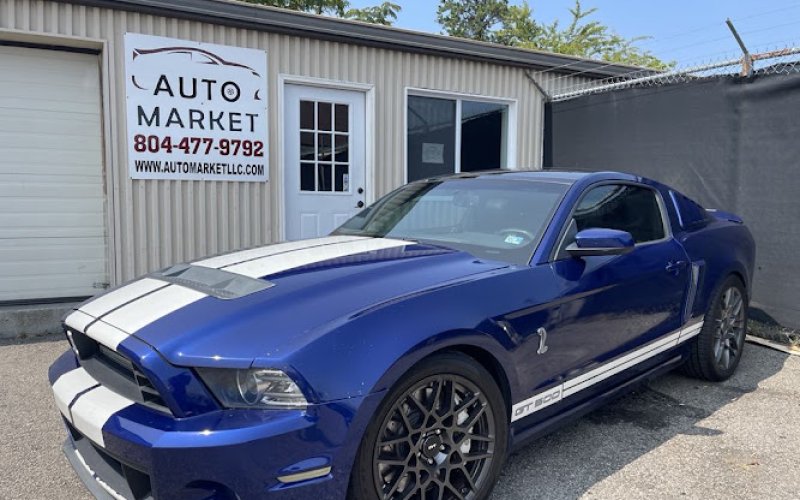
Auto Market LLC
Used car dealer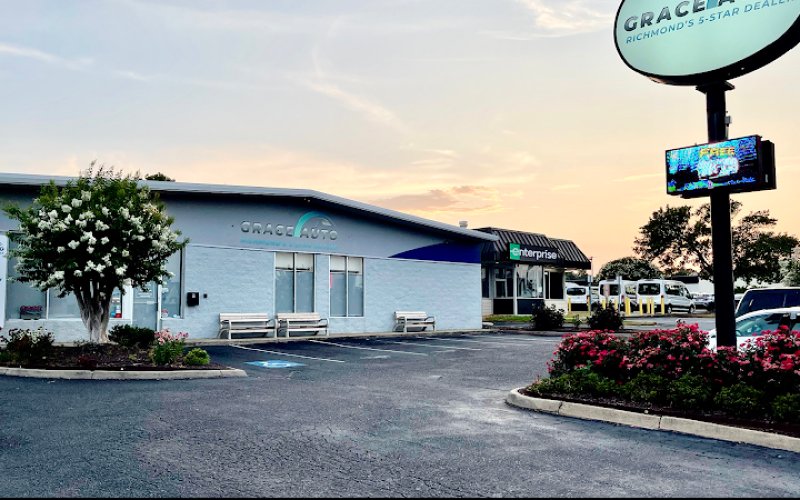
Grace Auto Sales
Car dealer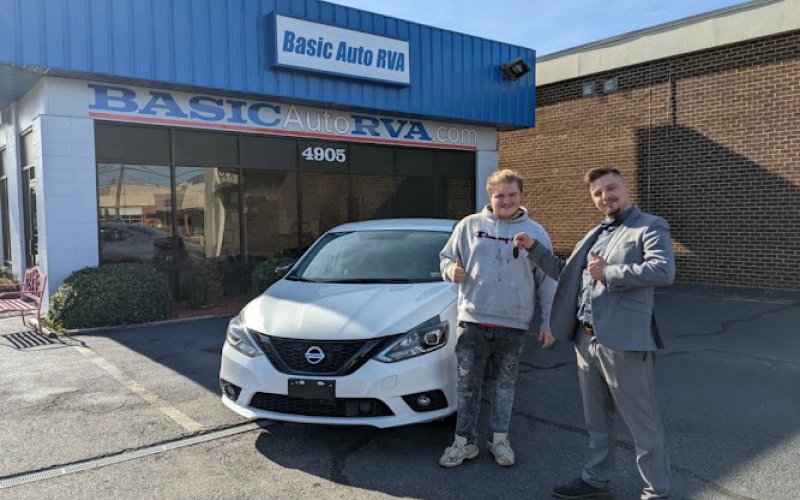
BASIC AUTO RVA
Used car dealer
City to City Auto Sales LLC
Used car dealer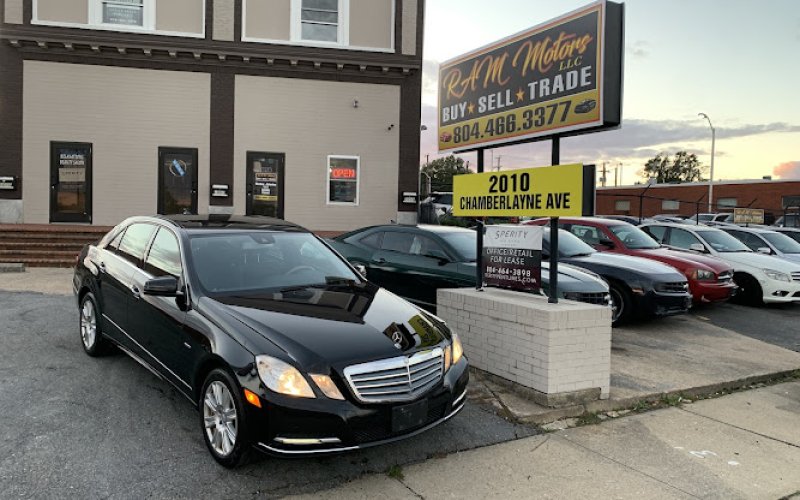
Ram Motors
Used car dealer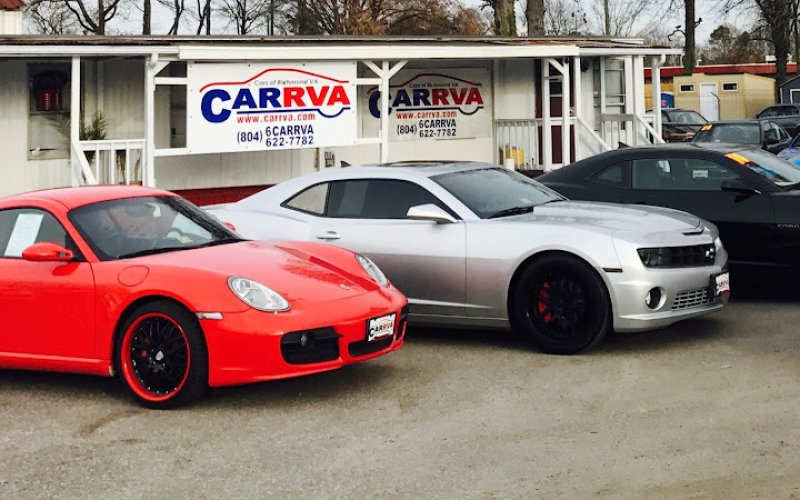
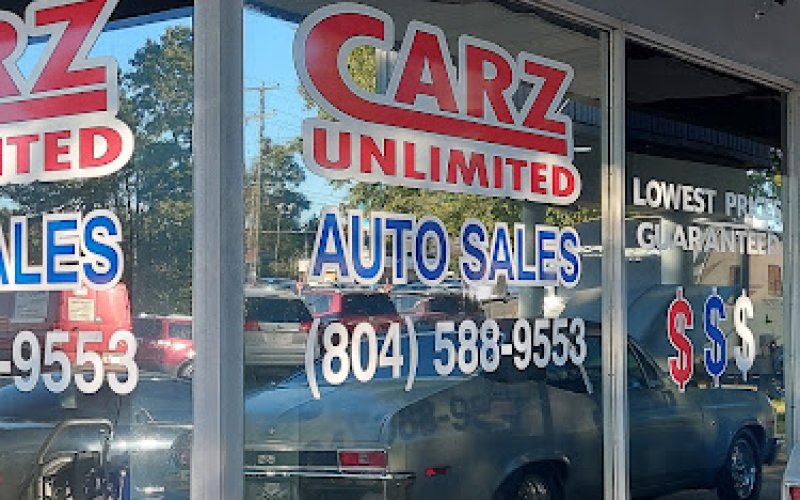
Carz Unlimited LLC
Car dealer
Auto Verified LLC
Car dealer
Hertz Car Sales Richmond
Used car dealer
Parks Chevrolet Richmond
Chevrolet dealer🏆 Are you a dealer in Richmond? — Get featured at the top of this page for $249/year
Get featured →Research Tools for Richmond Car Buyers
Dealers advertise the base price — but you pay the out-the-door price. Calculate your real cost before stepping into the dealership in Richmond.
* VA state sales tax rate is 4.15%, applied here to the advertised price only. Local taxes, trade-in credit rules and doc fee rules vary — check with the dealer. Registration/title is an estimate; actual fees vary by county. This calculator is for budgeting purposes only.
Select the type of vehicle you're considering. We'll give you the critical questions to ask before you drive to the dealership.
Is the advertised price the full price, or does it include mandatory dealer add-ons like window tint or nitrogen in tires?Dealers sometimes add $500–$2,000 in add-ons. Ask for the full itemized out-the-door price before visiting.
Is this exact vehicle physically on your lot at your Richmond location right now?Some dealers list cars from other locations or in-transit. Confirm it's there before you drive.
What is your current doc fee, and is it negotiable?In VA doc fees are capped at $200 by law. If the dealer charges more, that's a red flag.
Does the MSRP include any Market Adjustment or ADM (Additional Dealer Markup)?Hot models often get markups above MSRP. Get the answer in writing.
What factory incentives or rebates are currently available for this model?Manufacturer incentives can save thousands — and a dealer may not volunteer this info.
What is your return/exchange policy after purchase?Not all dealers offer one. A 3–7 day return window is a trust signal.
Can I take the car for an extended test drive or an overnight evaluation?This is a standard ask at reputable dealerships and helps you spot issues.
Can you provide a free Carfax or AutoCheck report for this vehicle's VIN?A reputable dealer will share this without hesitation. Accidents, odometer rollbacks, and salvage titles appear here.
What is the full service history — was maintenance done at a dealership or independently?Dealer-serviced records are easier to verify. Ask for copies.
Can I arrange a pre-purchase inspection (PPI) by an independent mechanic?This is your strongest protection on a used car. Any dealer who refuses is a red flag.
Is there any rust, frame damage, or flood damage history on this vehicle?Flood-damaged cars can turn up in any market, especially after major storms. Ask directly and verify with a VIN report.
What is the 'as-is' status? Is any warranty included, and for how long?Understand exactly what's covered — some used cars come with 30-day powertrain coverage.
Why is this vehicle being sold? Was it a trade-in, lease return, or auction purchase?Origin affects reliability expectations and price negotiation leverage.
What is your best out-the-door price, including all fees and taxes?Ask for a written OTD breakdown before any paperwork begins.
Which manufacturer's CPO program covers this vehicle — the factory program or a dealer's own?Factory CPO (e.g., Toyota Certified, Honda Certified) offers standardized coverage. Dealer-only CPO programs vary widely.
Exactly what does the CPO warranty cover, and what is excluded?Ask for the written warranty document. Common exclusions: wear items, tires, glass, infotainment.
How many inspection points does your CPO checklist include, and can I see the completed report?A genuine CPO inspection is 100–150+ points. Ask to see the signed document.
Is there a deductible per claim, and does the warranty transfer if I resell?Deductibles of $0–$200 are common. Transferability adds resale value.
Is the vehicle still within its original factory bumper-to-bumper warranty period?CPO bumper-to-bumper may be separate from the original factory period — clarify both timelines.
Does the CPO price include roadside assistance, and for how long?Most manufacturer CPO programs include 24/7 roadside. Confirm the term.
What is the out-the-door price including the CPO certification fee?Some dealers charge a 'CPO fee' separately. This should be disclosed upfront.
These charges can add $1,000–$4,000+ to the price you see advertised. Know them before you sit down with a finance manager in Richmond.
Doc Fee (Documentation Fee)
Charged for processing paperwork. In VA, doc fees are capped at $200 by state law.
Typical: $150 – $500+Dealer Add-ons (Installed Options)
Window tint, paint sealant, fabric protection, nitrogen tires. Often pre-installed and non-negotiable — but you can try to have them removed from the price.
Common: $300 – $2,000Finance & Insurance (F&I) Add-ons
Extended warranties, GAP insurance, tire-and-wheel protection. Presented in the finance office after you've agreed on price. Each item is optional and separately negotiable.
Common: $500 – $3,000+Market Adjustment / ADM
A markup added above MSRP on high-demand vehicles. Completely legal, 100% negotiable. If you see it — negotiate or walk.
Varies: $500 – $10,000+Sales Tax
VA state sales tax on vehicle purchases is 4.15%. This rate is set by the state — it's not negotiable. Local taxes and trade-in credit treatment vary, so confirm with the dealer.
State rate: 4.15%Registration & Title Fees
State and county fees for transferring title and registering the vehicle. Legitimate and required — but the amount is set by the state, not the dealer.
Typical: $100 – $200About Auto Dealer in Richmond
Richmond's auto dealer market just hit a weird inflection point. We've got 47 franchised dealers across the metro area handling roughly $3.2 billion in annual sales volume—but here's the kicker: inventory turnover is sitting at just 23 days compared to the national average of 31. That's fast. Really fast. The driver behind this velocity? Population growth is humming along at 2.1% annually, but more importantly, we're seeing a massive shift in buyer demographics. About 34% of new vehicle purchases are coming from transplants who moved here in the last three years—mostly from higher-cost markets like DC and Northern Virginia. These folks are used to paying more and they're not as price-sensitive as traditional Richmond buyers. Meanwhile, the local economy is diversifying beyond tobacco and banking. Amazon's fulfillment centers brought 3,000+ jobs, and the semiconductor investments in Henrico are creating another wave of high-income buyers. What makes Richmond different from Charlotte or Nashville? Our dealer network is still relatively consolidated. The top five dealer groups control about 61% of new vehicle sales, which creates some interesting pricing dynamics. Plus, we've got this unique geographic advantage—caught between DC money flowing south and Carolina buyers heading north for better selection. The result is dealers who can move inventory fast but also maintain decent margins. And unlike markets that got oversaturated with luxury brands during the boom years, Richmond's franchise mix still skews practical: Ford, Chevy, Toyota, and Honda dominate, with luxury brands representing just 18% of total volume.
West End (Short Pump/Innsbrook)
- Area Profile: Newer subdivisions built 1990s-2010s, mostly 2,500-4,000 sq ft homes on 0.3-0.8 acre lots
- Common Auto Dealer Work: Luxury brand sales, certified pre-owned, extended warranties—these buyers want the full package
- Price Range: Average transaction $47,000-$68,000, financing 73% of deals
- Local Note: Corporate relocations drive a lot of luxury SUV sales; BMW and Lexus do particularly well here
Church Hill/Union Hill
- Area Profile: Historic rowhouses and converted warehouses, younger professionals gentrifying rapidly
- Common Auto Dealer Work: Used car sales, compact cars, hybrids—practical transportation for urban living
- Price Range: Sweet spot $18,000-$32,000, heavy cash buyer concentration
- Local Note: Parking constraints mean smaller vehicles; dealers report 40% higher hybrid sales than metro average
Chesterfield County
- Area Profile: Family subdivisions, 1980s-2000s construction, established middle-class neighborhoods
- Common Auto Dealer Work: Family vehicles, trucks, minivans—practical workhorses and kid haulers
- Price Range: Most deals $28,000-$45,000, longer financing terms common
- Local Note: Pickup truck capital of the metro; F-150s outsell everything else 3:1
📊 **Current Pricing:**
- Entry-level new: $24,000-$28,000 (compact cars, base trim trucks)
- Mid-range: $35,000-$48,000 (most popular segment, loaded family vehicles)
- Premium: $55,000+ (luxury brands, high-end trucks, performance cars)
Look, the pricing story is more complex than these ranges suggest. Dealer markups have settled down from the pandemic craziness—we're seeing maybe $500-$1,200 over MSRP on hot models instead of the $5,000+ nonsense from 2021-2022. But financing costs are the real story. Average APR jumped from 4.1% in early 2023 to 7.8% now, which pushes that $35,000 vehicle into $550+ monthly payments. 📈 **Market Trends:** New vehicle sales volume is down 8% year-over-year, but—and here's the weird part—dealer profitability is actually up 12%. Why? Service departments are killing it. People are holding onto cars longer (average age now 11.7 years), which means more maintenance and repair work. Plus, used car margins have stabilized after the wild swings of 2020-2023. Electric vehicle adoption is happening slower than dealers expected. EVs represent just 4.2% of new sales here compared to 7.8% nationally. Range anxiety is real when you've got customers commuting from Farmville or driving to Virginia Beach regularly. Hybrids are the compromise—up 23% in 2024. 💰 **What People Are Spending:**
- Mid-size SUVs: $42,000 average (28% of total sales)
- Full-size pickups: $51,000 average (19% of sales)
- Compact cars: $26,000 average (16% of sales)
- Luxury sedans/SUVs: $63,000 average (12% of sales)
**Economic Indicators:** Richmond's economy is diversifying in ways that directly impact auto sales. We're growing at 2.1% annually—not Charlotte fast, but steady. The big story is Amazon's continued expansion (now 4,200+ employees locally) and the CHIPS Act semiconductor investments bringing $20+ billion to the region over the next decade. That's a lot of engineers who need reliable transportation to Henrico County facilities. Major employers are shifting hiring patterns. Capital One is still massive (8,000+ local employees), but they're going hybrid work, which affects commuting patterns. Meanwhile, manufacturing jobs are coming back—Rolls-Royce has 1,800 people making aircraft engines in Chesterfield, and they tend to buy trucks. **Housing Market:** - Median home value: $347,000 (up 6.2% year-over-year) - New construction permits: 3,847 units in 2024 - Inventory: 2.8 months supply (still tight) Here's how this connects to auto sales: New homeowners typically buy vehicles within 18 months of moving. And Richmond's housing market is attracting buyers from higher-cost areas who have more purchasing power. I'm seeing families sell a $600K townhouse in Fairfax, buy a $425K house in Glen Allen, and suddenly have budget for that $55K Tahoe they couldn't justify before. The infrastructure piece matters too. I-95 expansion projects and the new I-64 interchange improvements mean longer commutes are becoming viable, which drives SUV and truck sales over compact cars.
**Weather Data:**
- ☀️ Summer: Highs 85-92°F, humid with frequent afternoon storms
- ❄️ Winter: Lows 28-35°F, occasional snow/ice events
- 🌧️ Annual rainfall: 43.6 inches, concentrated May-September
- 💨 Wind/storms: Hurricane season impacts September-October
**Impact on Auto Dealer:** Richmond's climate creates predictable sales patterns. March through May is peak buying season—tax refunds hit, weather improves, people want to get deals done before summer vacation spending. July and August are slower because nobody wants to car shop in 95°F heat and humidity. But here's what dealers have figured out: Hurricane season drives specific buying patterns. After Florence in 2018 and the flooding we've seen since, there's been a noticeable shift toward higher-clearance vehicles. Subaru sales jumped 31% in the three years following major flood events. People remember being stuck. Winter weather is mild enough that all-wheel drive isn't essential, but ice storms happen 2-3 times per year and absolutely shut down the city. That drives some AWD sales, particularly among transplants from up north who remember what real winter driving looks like. **Homeowner Tips:**
- ✓ Schedule major service before hurricane season (June-November)
- ✓ Consider all-weather tires over summer tires—ice storms are unpredictable
- ✓ Budget for higher AC usage/wear in July-September
- ✓ Don't dismiss flood risk even if you're not near water—August storms can dump 4+ inches quickly
**License Verification:** Virginia Motor Vehicle Dealer Board regulates all franchised dealers in the state. Every dealer must hold a valid Motor Vehicle Dealer License, and individual salespeople need Motor Vehicle Salesperson licenses. You can verify both online through the Virginia Department of Motor Vehicles website—just search by business name or license number. Finance and insurance personnel need separate F&I licenses. Service departments require appropriate ASE certifications for warranty work. Don't assume compliance—I've seen unlicensed operations pop up, especially in the used car space. **Insurance Requirements:** - General liability minimum: $100,000 per occurrence - Garage keeper's liability for customer vehicles: $50,000+ - Dealer bond: $35,000 for new car dealers, varies for used ⚠️ **Red Flags in Richmond:**
- Dealers operating out of residential areas or temporary lots—legitimate dealers have permanent facilities
- Pressure to sign financing documents before vehicle delivery—this is often a rate manipulation tactic
- Refusal to provide written estimates for service work—Virginia law requires written estimates over $50
- "Yo-yo" financing scams where they call you back days later claiming financing fell through
**Where to Check Complaints:** Virginia Motor Vehicle Dealer Board handles licensing violations. Better Business Bureau tracks complaint patterns, but pay attention to resolution rates, not just ratings. Richmond also has an active consumer protection division in the Commonwealth's Attorney's office that tracks auto fraud patterns.
✓ Years in Richmond specifically—not just corporate history
✓ Portfolio of local customers you can contact
✓ Transparent pricing with written estimates
✓ Service department with current ASE certifications
✓ Clear explanation of warranty coverage and service locations
Cost Calculator
Check Reviews & Ratings
We recommend verifying businesses through trusted review platforms before making a decision.
Frequently Asked Questions
Popular Categories in Richmond
Explore Other Cities
🚙 Auto Dealers near Richmond
Professional Categories in Richmond, VA
Related Services from Similar Professionals